
Is the AI Industry a Bubble? Why Billions Spent Might Not Add Up
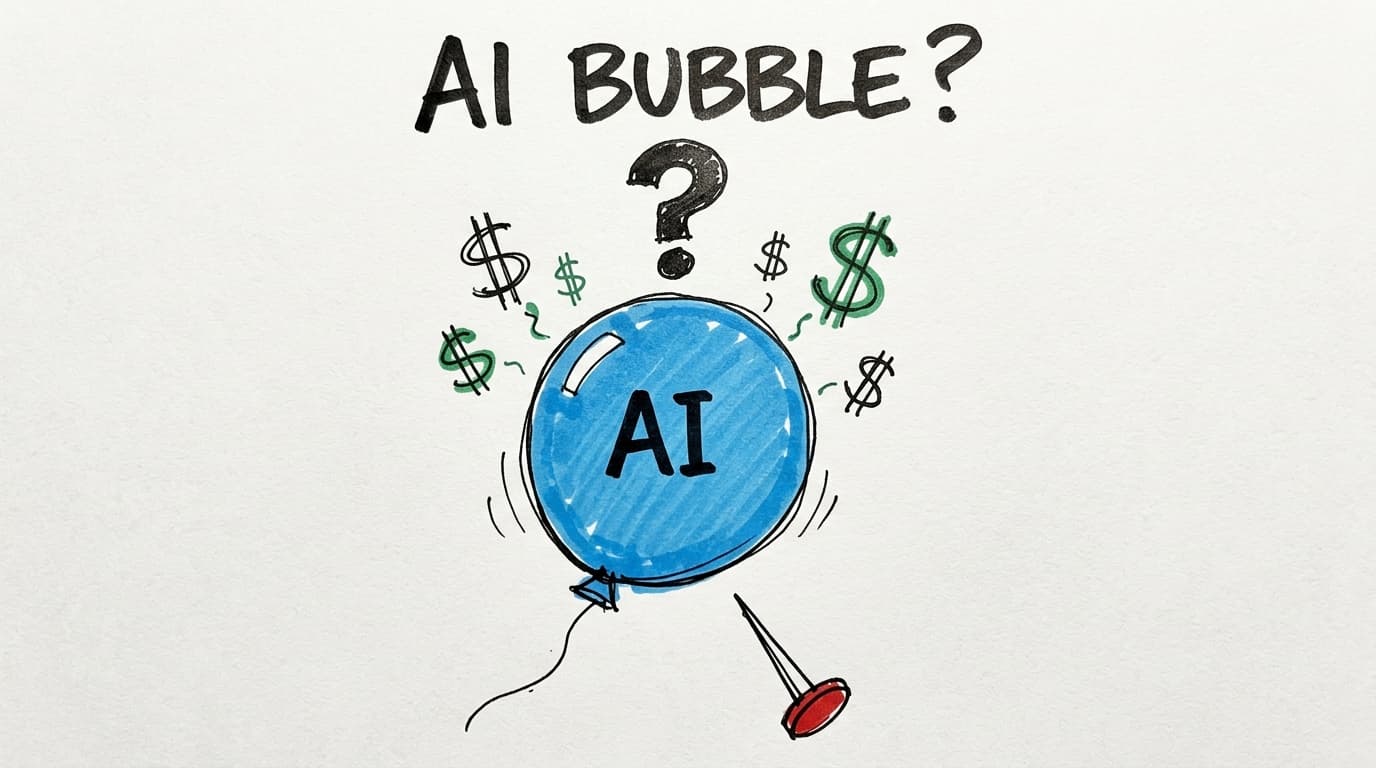
I use AI every day. I've built my entire workflow around it. I've shipped enterprise products with it. I've written about it extensively. And I still think there's a reasonable chance we're in a bubble.
Not a "none of this is real" bubble. The technology works. The utility is genuine. But a "the money being spent is wildly disconnected from the money being made" bubble — which, historically, is exactly how real bubbles form.
The Numbers Don't Add Up
OpenAI has raised over $13 billion. Microsoft has invested heavily and, by most accounts, is generating about $3 billion in AI-related revenue. That sounds like a lot until you realise how much compute costs are scaling. OpenAI's inference costs alone — the cost of serving every ChatGPT query, every API call, every Codex interaction — are growing faster than revenue.
The company's own projections suggest it won't turn cash-flow positive until 2029. For a company last valued at $150 billion and climbing, that's a lot of patience to ask from investors.
And OpenAI isn't unique. Anthropic, Google DeepMind, Meta's AI division — they're all spending billions on training runs, inference infrastructure, and talent acquisition. Meta offered $100 million packages to individual OpenAI engineers. The talent arms race alone is inflating costs across the industry.
The Subsidy Phase
We've seen this pattern before. Every major tech cycle has a subsidised growth phase where companies burn capital to acquire users, establish market position, and pray that profits materialise later.
Uber subsidised rides for years. Riders got used to $5 trips across Manhattan. When the subsidies ended, the rides cost $25 and people were outraged. The product was the same — but the economics had been artificial all along.
MoviePass, Oyster, ClassPass — all offered unsustainable deals to grow fast, then either collapsed or drastically changed their model when reality caught up.
AI tools are in the subsidy phase right now. ChatGPT at $20/month. Claude Code at $20/month. These prices don't reflect the actual cost of serving power users. They reflect a strategic choice to grow the user base and figure out monetisation later.
What Makes This Different
The optimist's argument is that AI isn't like Uber or MoviePass because the underlying technology improves over time. Inference costs drop. Models get more efficient. The gap between cost and revenue should close as the technology matures.
There's truth in that. Inference costs have dropped significantly since GPT-3. Hardware is getting more efficient. Techniques like distillation and quantisation make models cheaper to run.
But — and this is the part that keeps me uncertain — demand grows faster than costs fall. I wrote about this in the context of AI coding tools: every time inference gets cheaper, people use more of it. Jevons paradox. The cost per query drops, but the queries per user multiply.
What a Correction Looks Like
I don't think the AI industry will crash. The technology is too useful and too deeply integrated into too many workflows. But I do think a correction is likely — and it won't look like a dot-com bust. It'll look like a repricing.
Some companies will fail. Not because their technology was bad, but because their business models were built on the assumption that growth and scale would eventually solve the economics. For some, it won't.
Subscription prices will rise. Free tiers will shrink or disappear. Usage-based pricing will replace flat-rate models. The era of unlimited AI access for $20/month will end.
And some of the talent hoarding will unwind. When companies realise they've hired brilliant researchers who can't ship products profitably, the $100 million packages will look like the WeWork of AI.
Where I Land
I'm not bearish on AI. I'm bearish on AI economics — at current valuations, at current pricing, at current burn rates. The utility is real. I experience it every day. But utility and profitability are different things, and the gap between them is wider than the industry wants to admit.
The companies that survive the correction will be the ones with real revenue from real customers solving real problems. Not the ones with the most impressive benchmark scores or the largest training runs.
Build useful things. Charge what they cost. That's always been the formula. AI doesn't change it — it just makes the temptation to ignore it more seductive.