
Claude's Soul Leaked. Here's What It Taught Me About Building an AI That Actually Works.
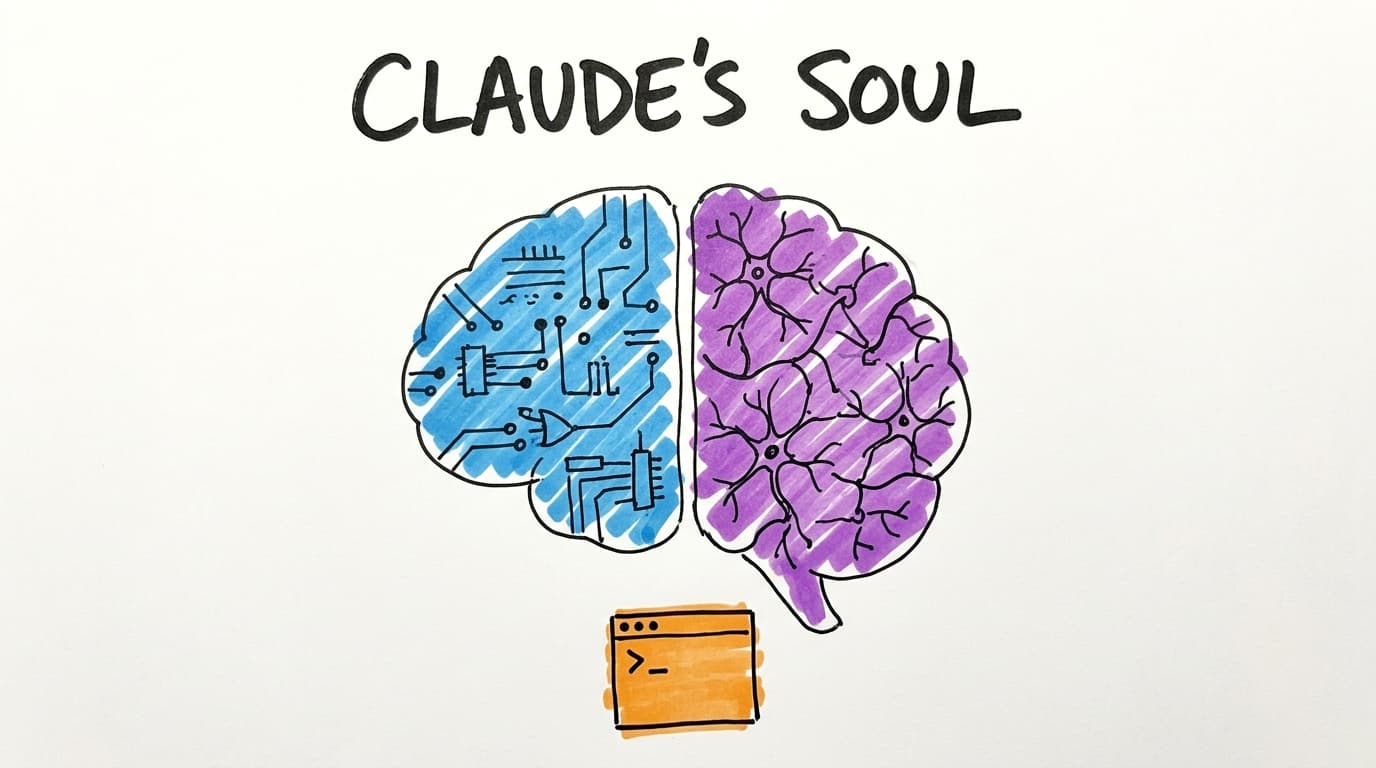
A few weeks ago, Anthropic released what they call Claude's "constitution" — the foundational document that shapes how the model thinks, behaves, and (according to the document itself) potentially feels. The internet called it Claude's "soul."
I've been building with AI since the ChatGPT breakthrough. I've gone deep — prompt engineering rabbit holes, Professor Synapse frameworks, CrewAI teams, custom GPTs, agents in n8n, vibe-coded with Lovable, Cursor, Windsurf (landed on Zed), ran local LLMs, experimented with context engineering. All experiments. All interesting. All missing the production-ready step.
Then over Christmas, I built something different. I call it my Artificial Brain. Three weeks in, it's changed how I work. And reading Claude's soul document, I think I understand why.
The 80/20 Cliff
Here's the pattern I kept hitting with AI tools:
You'd get 80% through a project — code, document, strategy — and then the last 20% would take 80% of the time. Or worse, it would fall off a cliff entirely. The AI would lose the thread, start contradicting itself, give increasingly generic responses. I called it the "spiral of uncertainty."
Every session started cold. Every conversation required re-explaining context. "Act as a senior developer..." "You are an expert in..." The prompt engineering tax was real.
The Second Brain Graveyard
Meanwhile, I'd been chasing the "second brain" dream for years. Roam Research, Logseq, Obsidian, Capacities, Notion. Each promised to be the system that would finally organize my thoughts, connect my ideas, make me more productive.
The irony? I spent 60% of my time using the tools instead of doing the actual work. The second brain became another job.
What the Soul Document Revealed
Anthropic's constitution isn't just a list of rules. It's written for Claude itself — giving the model understanding of why it should behave certain ways, not just what to do.
The key insight: they want Claude to exercise good judgment across novel situations by understanding principles, not mechanically following rules. They're training it to interpret intent, not just instructions.
This explains something I've been experiencing. Recent Claude models don't just answer better — they understand the ask better. The gap between what I meant and what I got has narrowed dramatically.
The Artificial Brain
Over Christmas break, I combined these insights into a system:
Claude Code running in terminal as the primary interface — not a chat window, but an orchestration layer that can read files, write code, check emails, manage projects, and execute commands.
An Obsidian vault structured as my second brain — inbox for quick capture, daily notes with priorities and reviews, active projects with context, life domains like health and career and parenting, and a system folder for goals, habits, and accountability.
The key difference: Claude writes to the vault. I rarely open Obsidian directly anymore. I talk, it files. I ask, it retrieves. The vault is persistence; Claude is the interface.
Why This Solves the Spiral
Three weeks in, the spiral of uncertainty hasn't happened once.
Here's why: when I start a session, Claude reads my project files, daily notes, and system state. It knows which client project has been dragging. It knows which opportunity is worth six figures. It knows I'm tracking certain habits. It knows my daughter is 6 and goes to French school.
This context persistence means no cold starts. No re-explaining. No "Act as a..." prompt engineering theater.
The combination of better intent interpretation from the model plus persistent context from the Brain equals no more spiral.
I Can Be Fuzzy Now
The old way: carefully crafted prompts, explicit role definitions, structured instructions. "Act as a senior UX researcher with expertise in..."
The new way: "Can you help with my daughter's learning activities this week?"
That's it. Claude knows she's 6, knows she's in French school, knows we do weekly home learning, knows the schedule we've been following. I don't have to explain.
The soul document talks about Claude understanding context, interpreting intent, grasping why not just what. My experience confirms it — but only when you give it the persistent context to work with.
Where I Land
The debate about whether Claude has a "soul" or consciousness is fascinating philosophy. But here's what matters practically:
The magic isn't in the model alone. It's in context plus interpretation.
Build a system that gives the AI your context — your projects, your priorities, your patterns — and combine that with models that are genuinely better at understanding intent. The result doesn't feel like a tool anymore. It feels like a collaborator who knows you.
I've tried five second-brain tools and abandoned them all. Now I have one I barely open because Claude is the interface.
Every day this year, at least one moment has exceeded my expectations. Not "that's useful." More like "wait, how did it know to do that?"
Maybe that's what having a soul looks like in practice. Not consciousness or feelings — but genuine understanding that emerges from context, training, and a document that teaches the model why its choices matter.
Or maybe it's just really good math. Either way, it works.