
Apple's AI Problem: When Control Meets Chaos
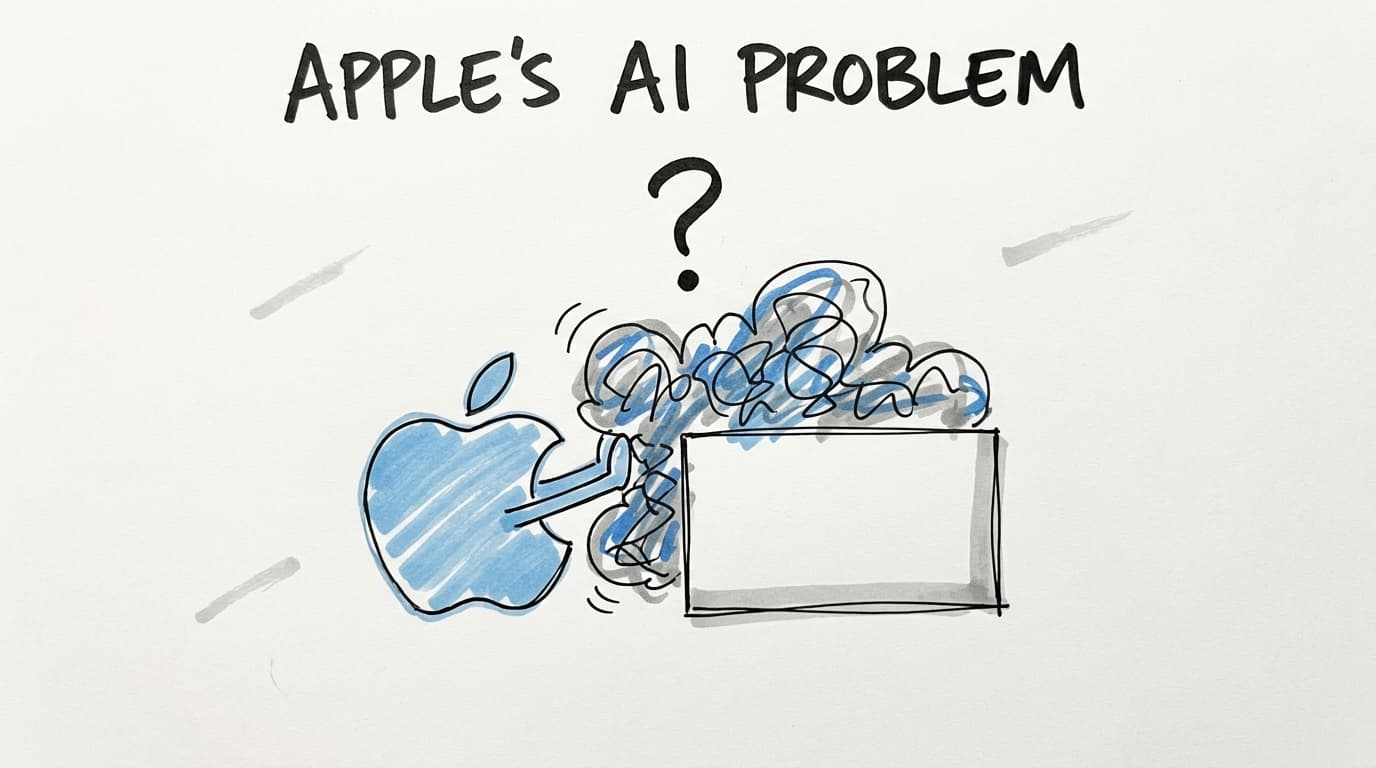
When Apple unveiled Apple Intelligence, it wasn't just launching software — it was signaling to the market that it hadn't missed the AI moment. But by the time the iPhone 16 shipped, what users got was a smiley face with cucumbers, not the reimagined Siri or contextual smarts they were promised.
This wasn't a bug. It was the strategy. And understanding why tells you something important about the tension between Apple's design DNA and where AI is heading.
The Culture of Control
Apple doesn't just build technology. It crafts experiences. Every interaction is intentional, every animation considered. This is a company that obsesses over the feel of a scroll.
That same culture — Apple's greatest strength — may be its biggest liability in an AI-driven world. AI is messy. Models hallucinate. Interfaces shift and learn. Generative models are probabilistic engines that guess — sometimes beautifully, sometimes absurdly.
How do you integrate that into a user experience defined by confidence and clarity? How do you maintain trust when an AI might get something wrong?
This is where Apple's hesitation starts to make sense. They aren't blind. They see the value. But not at the expense of breaking the trust they've built through decades of disciplined design.
The Vaporware Problem
But caution has a cost — especially when it comes with a marketing campaign that oversells what's ready.
In June 2024, Apple promised AI features at WWDC that simply didn't exist when the hardware shipped months later. This was new territory for Apple. Their philosophy was famously tight-lipped: don't announce until it's ready. That discipline built trust.
Breaking it felt like a company that was more worried about the stock price than the user experience. When hype replaces hardware, you're playing a different game — one Apple isn't good at and shouldn't want to be.
The Privacy Constraint
Apple's commitment to privacy is real — it's architectural, not marketing. And it's a genuine constraint for AI.
AI thrives on data. Apple refuses to collect it. AI improves with feedback. Apple doesn't track behavior. This philosophical position limits what AI can do on Apple devices. The models are less personalised, less adaptive, less capable than what Google or OpenAI can offer with cloud-based systems that learn from every interaction.
This is a real tradeoff, not a failure. But it means Apple's AI will always be a step behind in raw capability — unless they find a way to build powerful on-device intelligence that doesn't require the data firehose.
What I Think Is Actually Happening
I don't think Apple is dropping the ball. I think they're playing a longer game that looks like hesitation from the outside.
On-device intelligence is their strategy. Smaller, efficient models running locally. No cloud dependency. No data collection. The Apple Silicon chips in recent devices are specifically designed to run neural networks efficiently. The M-series chips are as much an AI play as a computing play.
If local AI models continue to improve — and they are, rapidly — Apple's privacy-first approach might actually be ahead of the curve. While everyone else built cloud dependency, Apple built the hardware to run AI locally.
The question is whether local models get good enough fast enough for Apple to catch up on the capabilities side before users give up and move to Android for the better Google AI.
Where I Land
Apple's AI problem isn't technical. It's philosophical. Their core values — control, simplicity, trust — are being stress-tested by a technology that is inherently unpredictable, messy, and probabilistic.
I think they'll figure it out. The on-device strategy is smart. The privacy position is defensible and increasingly valued. But they need to stop over-promising and under-delivering. The gap between Apple Intelligence's marketing and its reality has already cost them credibility.
The best version of Apple AI looks like: powerful enough to be genuinely useful, private enough to maintain trust, and honest enough to only ship what actually works.
They're partway there. The question is whether the market has the patience to wait.